
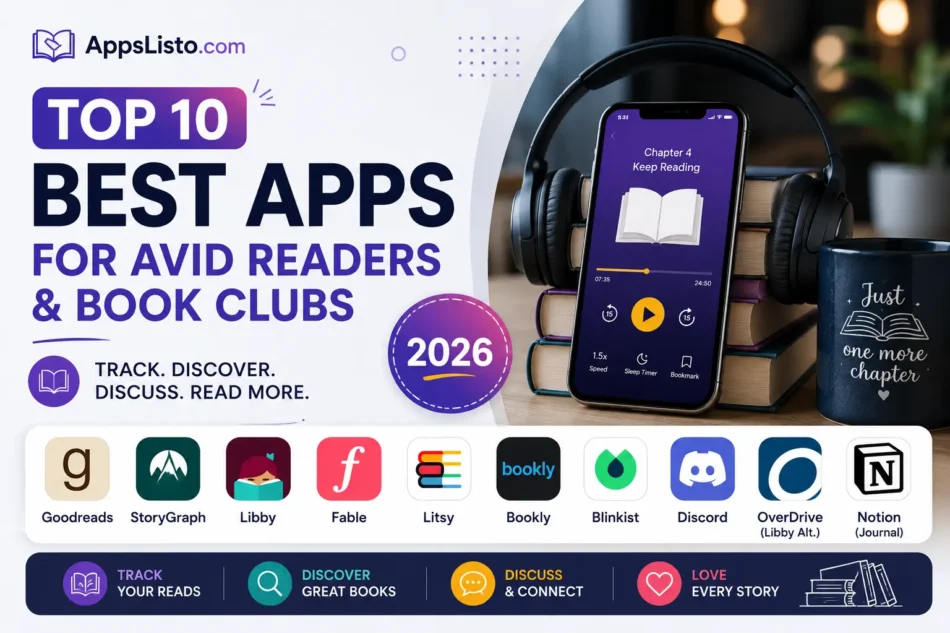

Avid reading involves genuinely more than just the reading itself, tracking what’s already been read, discovering what to pick up next, and for many readers, discussing books meaningfully with a genuine community of fellow readers rather than reading in complete isolation. Apps built for readers and book clubs have gotten considerably better at supporting each of these distinct needs, turning a personal reading habit into something genuinely trackable and social rather than scattered across memory and occasional conversations. Here are ten apps worth having installed for avid readers and book clubs this year.
Goodreads

Goodreads remains the most widely used reading tracker and discovery platform, letting readers log books, write reviews, and see genuinely relevant recommendations based on friends’ activity and personal reading history.
🔗 Download on Play Store | www.goodreads.com
StoryGraph

StoryGraph offers genuinely more detailed mood and pacing-based recommendations than Goodreads’ popularity-driven suggestions, appealing to readers who want discovery based on specific reading preferences rather than general bestseller lists.
🔗 Download on Play Store | www.thestorygraph.com
Libby

Libby connects directly to a local library card for genuinely free ebook and audiobook borrowing, making it one of the most valuable apps for readers who don’t want to purchase every single book they read.
🔗 Download on Play Store | libbyapp.com
Fable

Fable focuses specifically on genuine social reading, letting book clubs and reading groups discuss chapters together within the app itself, combining reading progress tracking with real-time group discussion features.
🔗 Download on Play Store | fable.co
Litsy
Litsy offers a genuinely lighter, more casual social reading experience, similar to a photo-sharing app but built specifically around books, appealing to readers who want quick, informal book talk rather than lengthy formal reviews.
Bookly

Bookly tracks genuine reading time and pace, offering motivating statistics about reading speed and habits, appealing to readers who enjoy quantifying and gamifying their reading progress similarly to a fitness tracker.
Blinkist
Blinkist offers condensed book summaries for readers wanting to quickly grasp a nonfiction book’s core ideas, useful for deciding whether a full read is worth the time investment before committing to it.
🔗 Download on Play Store | www.blinkist.com
Discord for Book Club Communities
Dedicated book club Discord servers offer genuinely flexible, ongoing discussion spaces beyond a single scheduled meeting, letting members share thoughts and reactions as they actually progress through a shared book.
Overdrive Libby Alternative Apps
Regional library lending apps beyond Libby offer genuinely useful additional access for readers whose specific local library system uses a different platform, worth checking directly with a local library branch.
Notion or a Similar Reading Journal Template
A simple reading journal template helps genuinely dedicated readers track personal notes, favorite quotes, and reflections beyond a basic star rating, building a more meaningful personal record of a reading life over time.
Rather than juggling all ten simultaneously, avid readers benefit from anchoring their habit around one central tracker, Goodreads or StoryGraph, then adding Libby for free library access and a social or discussion app like Fable or Litsy once book club participation becomes a genuine priority. StoryGraph’s mood-based discovery is worth prioritizing specifically for readers who’ve found Goodreads’ popularity-driven recommendations too generic or repetitive. Book clubs specifically benefit from Fable’s combined tracking and discussion features over trying to coordinate conversation through a separate messaging app entirely disconnected from actual reading progress. Blinkist is worth using specifically to triage a long to-be-read list, helping decide which nonfiction titles deserve a full read versus which a summary genuinely covers sufficiently.
Avid reading and book club participation both benefit from genuine tracking, discovery, and discussion support rather than relying purely on memory and occasional scattered conversations about books. Start with a central tracker for your own reading, then add library access and social discussion tools as book club involvement or a desire for genuine reading community actually grows.
